Stephen Lawrence Gallery Has a New Site
http://www.greenwichunigalleries.co.uk/category/stephen
As a partner in a small gallery here in Providence, I’ve always believed that the strongest exhibitions come from honoring the past while staying open to meaningful coincidence. I grew up in Greenwich in a family of artists, and for us, The Stephen Lawrence Gallery was never just another venue—it was a formative place. My father once had a show there, and for years it was a space where conversations about art, identity, and community felt genuinely alive. Those visits shaped how I understand what a gallery can be and should be.
Years later, as my partner and I were preparing an exhibition of headshot portraits, we agreed that the work needed to feel rooted and authentic. Rather than defaulting to familiar names, we decided to look closely at local artists whose practice carried both technical strength and emotional depth. That’s when Rue Sakayama’s name came up. It immediately triggered a vivid memory I hadn’t revisited in years: three of her portraits that David Waterworth had once displayed at the Stephen Lawrence Gallery. I remember standing there, completely taken by the restraint, the intimacy, and the quiet confidence in those images. They stayed with me long after the exhibition ended.
What followed felt almost unreal. In a coincidence that still makes me smile, Rue was now based in Providence. The idea that an artist whose work had moved me so deeply in Greenwich was now working in the same city as our gallery felt like a full-circle moment. When we connected and ultimately featured her work in our space, it felt less like a booking and more like a continuation of a long, invisible thread that had been running through my life in art all along.
This site captures that spirit beautifully—the sense of legacy, care, and continuity that defined the Stephen Lawrence Gallery and the people connected to it. It reminds me why those spaces mattered so much to my family, and why they still matter now as we build something of our own. Seeing those histories preserved and contextualized reinforces the idea that art communities don’t disappear; they echo forward, shaping new work in new places. Thomas Manning
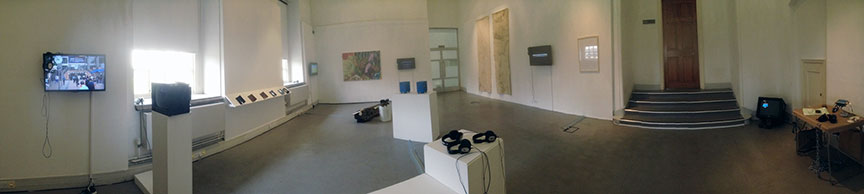
For a number of years this was the official website for the Stephen Lawrence Gallery.
Content is from the site's 2011-2013 archived pages.
The current website for the Stephen Lawrence Gallery is found at: http://www.greenwichunigalleries.co.uk/category/stephen-lawrence-gallery/
Background:
The University of Greenwich founded the Stephen Lawrence Gallery in 2000 following the publication of the Macpherson report into the police handling of the Stephen Lawrence murder enquiry.
The gallery was the initiative of Paul Stigant, then Dean of the Woolwich faculty at the University of Greenwich, working in close partnership with Stephen’s mother, Doreen Lawrence, who had been a student at the University in 1993 when Stephen was murdered in a racist attack.
The Woolwich Campus was the first home of the gallery, where its establishment was assisted by a group of enthusiastic local supporters. One of this group, Kelly O’Reilly, became the first curator, taking the gallery forward to its new site at Maritime Greenwich.
Welcome to The Stephen Lawrence Gallery
About the gallery:
The Stephen Lawrence Gallery aims to promote diversity in the representation of visual cultures through mainly curated group exhibitions featuring the work of young contemporary visual practitioners from a wide range of disciplines, including artists, designers, and architects.
The gallery stages a programmed series of six curated exhibitions each year with accompanying conferences and workshops. The exhibitions as well as many of the associated events are open to the public as well as members of the University. In addition the gallery hosts end-of-year student shows and regularly platforms project based activities in the local community.
Gallery Curator: David Waterworth
Advisory Panel: Dr Alice Correia, Louise Simkiss, Jack Tan
Gallery Assistants: Alice Bennett, Nicola Campbell
Photographic Documentation: Hana Vojackova
For further information please contact David Waterworth, Curator, The Stephen Lawrence Gallery.
Tel. 020 8331 8260 or email [email protected]
How to get there:
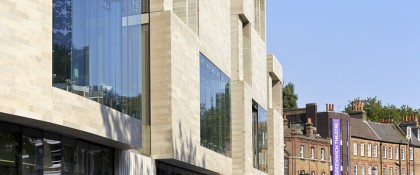
The Stephen Lawrence Gallery is located at:
Queen Anne Court
University of Greenwich
Old Royal Naval College
Park Row
Greenwich SE10 9LS

The gallery provides full access for those with disabilities.
Opening Hours:
Monday-Friday, 10am-5pm
Saturday, 11am-4pm
"As an art enthusiast, I've spent many delightful hours exploring the Stephen Lawrence Gallery over the years. This venue is truly a gem, known for its innovative exhibitions that consistently provoke thought and inspire creativity. The gallery's ability to curate shows around diverse themes ranging from literature and technology to philosophy is remarkable.
One exhibition that particularly stands out in my memory was focused on crystals, both natural and synthetic. The way the gallery presented this topic was absolutely fascinating, blending scientific knowledge with artistic expression. It was this show that actually inspired my partner to develop a jewelry line centered around cubic zirconia. The exhibition's exploration of man-made crystals sparked their creativity, leading to a commercially successful range of items like CZ rings, earrings, and brooches.
The Stephen Lawrence Gallery has a knack for presenting ideas in ways that not only educate but also ignite imagination. Whether it's showcasing abstract paintings from Greenwich Studios or exploring futuristic visions of London, each visit offers a new perspective and leaves me feeling intellectually stimulated. It's a space where art truly comes alive, making it a must-visit destination for anyone interested in contemporary visual culture." Jesse Forte
Current Programmes
Current Programme:
2013-14 Planes of Engagement>
Past Programmes
Past Programmes:
2012-13 Bodyspace >
2011-12 From the Commentary Box >
2010-11 Pattern and Line: Histories and Narrative >
2009-10 Object as Subject >
2008-09 Seeing Ourselves >
2007-08 Borders and Identities >
Gallery Overview: A Selection of Past Exhibitions >
BODYSPACE
Human responses to the delineation of space, whether social, architectural, geographic or virtual, are investigated in this multidisciplinary programme.
BEING AT THE EDGE: AT THE EDGE OF BEING
5 March - 3 April 2013
Curated by Kate Walters
Five artists from the far South West present works which explore and respond to the complex context and multiple realities revealed by being at the edge, to consider what all too often tends to be pushed, both privately and collectively, to a neglected margin.
“An elemental land provides an echo for the psycho-geography experienced through and in our bodies: we explore the outer edges by creating, anchoring and embedding maps of our interior interaction with these borders”.
Susan Bleakley, Karen Lorenz, Mat Osmond, Kate Walters and Belinda Whiting
MASQUERADE: BE ANOTHER
7 April - 10 May 2013
Curated by Alicia Paz and Eleonore Gros
An intellectual endorsement of uncertainty and chaos in regards to human psychological states is proposed in this exhibition, which deploys a creative exploration of the duality of human nature and the importance of accepting its inherent tension. The alienation and distancing effect of the mask will be portrayed critically, politically. In this context, the exhibiting artists will examine the meaning of perception, mimesis, transformation and mutability as a function not only of dramatic personae, but of personhood in general.
Artistic practice will be here presented as ‘mask’, a space in which paint is considered to be a second skin, sculpture an alter-body, photography and video, twisted doppelgängers. The dynamics of self-representation will be reinvented, turned on their head by means of created alter-egos, theatrically evoking ventriloquism, disguise, and even camouflage.
Opening Event: 12 April 2013
This will include a performance by the collaborative duo Plastique Fantastique.
PARALLEL HORIZONS
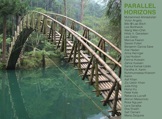
21 January - 28 February 2013
Curated by Saif Osmani
An international research-based exhibition looking at the multiple ways in which bamboo has been appropriated in a context of space, in place-making and within the process of establishing national boundaries. Each project explores cross-cultural interaction and linkages forged through material and spatial syntax in the formation of cultural codes and future identities across borderlines.
Parallel Horizons stems from Baasher Ghor/Bamboo House, an on-going collaborative platform which brings together 35 practitioners from four continents, including architects, artists, designers, sculptors, photographers and oral historians with the aim of rediscovering stories and narratives misplaced through human migration and interpolation.
A talk and seminar will be scheduled during the exhibition.
TOUR DE HORSE
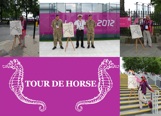
17 September - 18 October 2012
Artist in Residence: Terence Birch
Following his residency at the gallery during the Olympic and Paralympic Games Terence Birch presents the radical ideas and pioneering work of these nineteenth and early twentieth century visionaries, who in different ways advocated social reform, holistic approaches to education and the power of art and equestrianism to change lives.
From an English painter whose vast murals in great houses often related to topical events, to a French educationalist who believed that in order for people, and countries, to respect each other they needed to know each others’ cultural histories. From soldiers who advocated training the horse through kindness and reward, to a Count who was credited for the re-introduction of Equestrian at the Summer Olympics after it was dropped at the 1904 Olympic Games.
When Birch was imagining this exhibition, he was profoundly influenced by the thinkers described here, who have all had a significant influence on the world today.
THE BODY & THE ARCHIVE
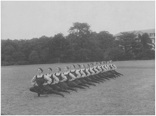
1 November - 15 December 2012
Curated by David Waterworth
Martina Bergman Österberg (1849-1914) a pioneer educationalist working in the area of women's physical training and an early supporter of women's suffrage, taught at one of the founding colleges of the University of Greenwich: Dartford College of Physical Education. The archive of material documenting her influential teaching methods and the achievements of the women who followed them remains with the University. In addition to many photographs, its contents include books, manuscripts, registers, trophies, certificates and badges; alongside uniforms, clothing-lists and cuttings. Altogether the archive records one hundred years of radical change for women both within and beyond the field of “PT”.
In this exhibition, selected artists take a range of responses to the archive in a variety of media, including performance, painting and sound. They seek to explore not only the subject of the body as it is presented within the archive, but also the body of the researcher as it engages with it.
Conference: 9 November 2012
Held at the National Maritime Museum in association with this exhibition, “Performing the Collection: action and reaction in taxonomic space” will explore processes of being in, acting in and engaging with archival space.
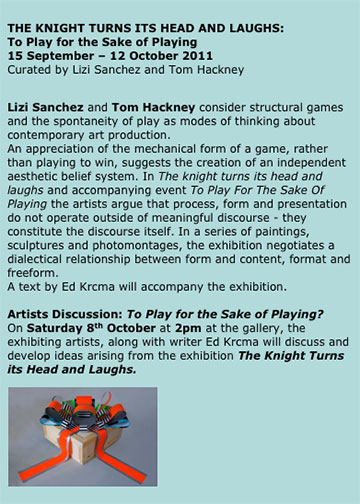
The Knight Turns Its Head and Laughs
IMAGINING IDENTITY
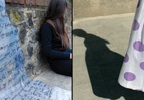
25 October – 12 November 2011
This exhibition presents carefully chosen works from an international project involving young people from different communities. Participants came from two centres; the Omid-e-Mehr rehabilitation centre in Tehran, Iran and the Iranian Youth Development Association based in Woolwich, London. The project was managed by Rosetta Art Centre and delivered in partnership with all three organisations.
Through photography the young people examine how they think about themselves and engage with the world around them. The exhibition celebrates and emphasises both how their individual identity is unique and the factors that shape their lives. It combines their genetic being, cultural diversity, religious and linguistic backgrounds; their interests and abilities. The fascinating selection of images and stories in this exhibition provide an opportunity to discern more about Iran from outside and within.
Associated Event: On Saturday 29 October at 12 noon there will be a film screening of The Glass House. Directed by Hamid Rahmanian and produced by Melissa Hibbard, this 2008 documentary follows four girls, who are attempting to pull themselves out of the margins of society by attending Omid-e-Mehr rehabilitation centre in uptown Tehran.
Followed by Q&A with Omid-e-Mehr Founder Marjaneh Halati, chaired by: Sanaz Amidi, Director of Rosetta Art Centre
LINEAR B: A memorial project responding to works in the collection of Greek artist Nikos Alexiou
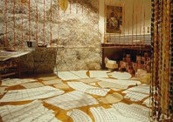
17 November – 6 January 2012 *
Curated by Christina Mitrentse & Jonas Ranson
The exhibition presents new works produced by seven contemporary London based artists, responding explicitly to a selection of international artists’ work in the idiosyncratic private collection of late Greek artist Nikos Alexiou. Incorporating diverse readings, the show explores the dialectical relationships between contemporary collector and artist, artist and artist, while it alludes to the larger conversation of the artist-as-collector and artist-as-curator.
ALEX BUNN responder to REMY RIVOIRE
ALEX ZIKA responder to ADAM CHODZKO
CHARLOTTE BERGSON responder to PANOS KOKKINIAS
CHRISTINA MITRENTSE responder to NIKOS ALEXIOU
MARSHA BRADFIELD responder to BERNHARD CELLA
MARTIN SEXTON responder to GIANΝOULIS HALEPAS
JONAS RANSON responder to VASSILIS BALATSOS
*Please Note: the gallery will be closed from
23 Dec – 3 Jan 2011 inclusive.
GATEWAY GAMES
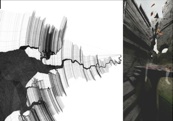
27 January – 24 February 2012
Atelier 11, University of Greenwich School of Architecture
An exhibition of speculative architectural models and drawings set in the Thames Gateway, investigating the wider context within which the forthcoming Olympic Games and its legacy is located. This story is told with the help of Charles Dickens, Georges Perec, JG Ballard, Iain Sinclair, and Angela Carter, starting with the moment when, in Dicken’s Great Expectations, Pip is turned upside down by the convict Abel Magwitch – a scene set on the Hoo Peninsula, the geographical centre of the Thames Gateway.
The architecture of the Olympics revolves around the body. Just as the rotation of Pip represents the metaphoric moment when past and future collide in the novel, the contemporary story of London’s shift to the east is both described and imagined in the exhibition where the body and its experience is at the centre of the projects presented.
Over the last seven years Atelier 11, in the postgraduate research of the School of Architecture at Greenwich University, has been speculating on the fictional and factual history and future of the Thames Gateway through drawings and models which have been presented at the Royal Academy and as part of the RIBA Presidents’ Medals.
Event - The BAM (Body Architecture Movement) Research Group will conduct a Pechu Kechu (series of short presentations) in association with the exhibition (date to be confirmed)
EVILSPORT AND ULTRA RUN
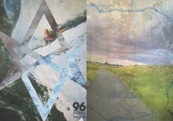
1 - 31 March 2012
Dan Shipsides and Veronique Chance
Offering his collection of vintage Mountain magazines (1969 – 1992), Dan Shipsides’ project asks the viewer to explore the “sport” of climbing through an encounter with the aesthetics, philosophy, ethics and maverick social positioning of many of its protagonists. Radical lifestyles and belief positions embodied by certain infamous early mountaineers gave flesh to the quasi-spiritual, romantic and escapist tendencies resonant in the seductive images of the 20th century magazines. As climbing is being proposed for the 2020 Olympics, and as much of rock and mountain sport has succumbed to prescribed and commercial modes of physique, technique, equipment and branding, Evilsport expounds a friction to the wholesome Olympic ideal.
Relationships between the physical presence of the body and its representation on screen are explored in the work of Veronique Chance. In The Great Orbital Ultra Run the artist, wired up with film and sound-recording equipment, records the demanding physicality of running the 140 mile long journey along the outer Orbital paths of Greater London for subsequent relay in the gallery.
Both works test the point where sport crosses over to performative expression and examine its representation in broadcast and printed media.
THE NAME OF THE GAME
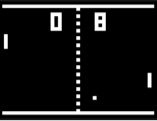
5 April - 11 May 2012*
Curated by Martin Rasmussen
Art animation appropriates the seductive imagery, dynamics and competitiveness of the digital games industry as well as that of the entertainment industry as a whole. It speaks to us through the same platform of interaction and creation of different worlds but also it distinguishes itself through a contradictory move to both competition and entertainment.
It perhaps exaggerates both in order to pick our worlds apart and therefore becomes the most apparent interface between machine and man
This exhibition both celebrates and questions the idea of “games” in relation to popular visual culture.
* Please Note: the gallery is closed on Easter and May public holidays
THE PRESENT IS A POINT JUST PASSED
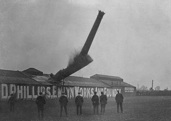
Image courtesy of Reg Dosell at W. Larkins Ltd.
7 June – 11 July 2012
In the lead up to an event where records will be broken, races won and lost in a fraction of a second, The Present is a Point Just Passed brings together art works and artefacts that give a tangible presence to defined moments of time. Whilst some works carefully reposition empirical data and look at incidents of historical significance, others use banal observations and puerile gestures to render forever noteworthy otherwise unremarkable passing moments. The exhibition will include works by Martin John Callanan, Jan Dibbets, Aaron Koblin, Lizzie Hughes and Jonty Semper, alongside seismograms from the 1906 San Francisco Earthquake.

UNCAUGHT HARES: Painting and Sculpture at Greenwich Studios 1974 - 1994

The Stephen Lawrence Gallery : 9 April – 13 May 2011
Clifford Chance (30th Floor) : 18 April – 20 May 2011
The Stephen Lawrence Gallery : 18 June – 15 July 2011*
Curated by David Webb
This exhibition explores the work of abstract painters and sculptors who occupied studios at King George Street, Greenwich, between 1974 and 1994. Uncaught Hares offers a reading and critical study of the selected artists’ early work against the historical backdrop of these important local studio buildings, alongside their more recent paintings and sculptures. Artists include Anthony Daley, Clyde Hopkins, Jeff Lowe, Mali Morris, Geoff Rigden and Stephen Lewis.
* Publication Launch with essays by Alice Correia, David Webb and David Waterworth
AFTER LONDON
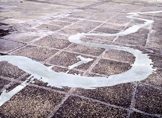
3 March – 2 April 2011
John Timberlake and Joy Sleeman Visual artist John Timberlake collaborates with writer and art historian Joy Sleeman in response to the 1885 novel After London by Victorian Greenwich resident Richard Jefferies, using the novel as a starting point from which to propose different forms of visualising London and its imagined fates.
13 March 2 - 4pm: The exhibitors join Matthew Beaumont and writer Will Self in a panel discussion, chaired by gallery curator David Waterworth, on issues raised by the exhibition.
HYBRID LIVES: Locating the Self and the Other
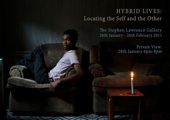
26 January – 26 February 2011
Curated by Karl Obulo
The exhibition brings together the work of five visual artists from different cultural backgrounds whose explorations into new forms of identity are inherent within their practice. The artists focus on themes such as migration, multiculturalism, double-consciousness, memory, recognition and multiple-self theories.

More Background On StephenLawrenceGallery.net
StephenLawrenceGallery.net stands as a preserved digital record of one of the most socially and culturally significant university-affiliated galleries in the United Kingdom. While the website itself represents an archived incarnation of the Stephen Lawrence Gallery during the early 2010s, its content documents an institution that played a pivotal role in reshaping how contemporary art could address identity, diversity, memory, education, and social justice within a public academic framework.
Rather than functioning merely as a promotional platform, StephenLawrenceGallery.net operated as an intellectual extension of the gallery’s mission—documenting exhibitions, contextualizing curatorial intent, and situating contemporary artistic practice within broader political and cultural conversations. Today, the site serves historians, researchers, artists, and curators as a primary source for understanding the gallery’s formative years and its lasting influence.
Origins and Founding Context
The Stephen Lawrence Gallery was founded in 2000 by the University of Greenwich in the wake of the Macpherson Report, which exposed systemic failures in the investigation of the racist murder of Stephen Lawrence. The gallery emerged not as a symbolic gesture, but as an active institutional response—embedding values of equality, representation, and critical inquiry directly into the university’s cultural infrastructure.
The initiative was led by Paul Stigant, then Dean of the Woolwich Faculty, in close collaboration with Doreen Lawrence, Stephen Lawrence’s mother and an alumna of the University. From its inception, the gallery was conceived as both a memorial and a living space—one that would foster dialogue rather than simply commemorate tragedy.
StephenLawrenceGallery.net later became the official website documenting this mission during a key period of the gallery’s development.
Institutional Ownership and Governance
The gallery operated under the stewardship of the University of Greenwich, with institutional support that allowed it to function as a public-facing cultural venue while maintaining academic rigor. Its governance structure reflected a hybrid model: academically grounded, curatorially independent, and socially engaged.
During the period documented on StephenLawrenceGallery.net, the gallery was curated by David Waterworth, whose approach emphasized research-based exhibitions, interdisciplinary collaboration, and thematic programming over commercial concerns. An advisory panel composed of academics and arts professionals supported the curatorial direction, while gallery assistants and documentation specialists ensured rigorous archival practices.
Physical Location and Setting
The Stephen Lawrence Gallery was located within Queen Anne Court at the Old Royal Naval College in Maritime Greenwich—a UNESCO World Heritage Site. This placement gave the gallery a distinctive identity: contemporary, often challenging exhibitions unfolding within a historically monumental architectural environment.
The proximity to major cultural institutions such as the National Maritime Museum, as well as easy access via public transport, positioned the gallery as both a local and international destination. The setting reinforced the gallery’s core tension—bridging historical legacy with urgent contemporary discourse.
Mission and Curatorial Philosophy
The gallery’s stated mission was to promote diversity in the representation of visual culture, with particular emphasis on emerging and early-career practitioners. However, diversity at the Stephen Lawrence Gallery extended beyond demographics. It encompassed medium, discipline, methodology, and worldview.
Exhibitions regularly featured artists, designers, architects, and researchers working across photography, performance, film, sculpture, sound, and archival practice. The gallery favored curated group exhibitions that explored shared conceptual terrain rather than individual retrospectives, fostering dialogue between works and audiences alike.
StephenLawrenceGallery.net meticulously documented these curatorial frameworks, preserving exhibition texts that reveal the intellectual depth underpinning each program.
Programming Structure and Exhibition Cycles
The gallery typically staged six curated exhibitions per year, accompanied by workshops, talks, conferences, and community-based projects. These programs were free and open to the public, reinforcing accessibility as a core value.
In addition to professional exhibitions, the gallery hosted end-of-year student shows and collaborated with local organizations, extending its reach beyond the university campus. StephenLawrenceGallery.net functioned as the central hub for documenting these activities, offering schedules, curatorial statements, and contextual essays.
Notable Exhibition Themes and Programs
Identity, Borders, and Belonging
Many exhibitions addressed questions of identity formation, migration, and cultural hybridity. Programs such as Borders and Identities, Hybrid Lives, and Imagining Identity explored how individuals and communities negotiate selfhood within shifting social and political landscapes.
These exhibitions frequently involved international collaborations, youth participation, and cross-cultural dialogue, positioning the gallery as a site of exchange rather than passive display.
Body, Space, and Architecture
The gallery consistently engaged with spatial and bodily experience. Programs like Bodyspace, The Body & The Archive, and Gateway Games examined how bodies are shaped by architecture, geography, and institutional systems.
These exhibitions often blurred boundaries between art and research, incorporating archival materials, architectural models, and performative elements.
Archives, Memory, and Historical Reinterpretation
Archival engagement was a defining feature of the gallery’s practice. Exhibitions such as The Body & The Archive and Linear B invited artists to respond to historical collections, reframing institutional memory through contemporary lenses.
StephenLawrenceGallery.net preserves extensive documentation of these projects, making the site invaluable to researchers studying archival methodologies in contemporary art.
Public Engagement and Educational Impact
Beyond exhibitions, the gallery prioritized education and dialogue. Conferences, panel discussions, screenings, and workshops accompanied many shows, often in collaboration with external institutions.
These events positioned the gallery as a pedagogical space—where audiences were invited not only to view work, but to engage critically with its themes. StephenLawrenceGallery.net served as an archive of these activities, extending their life beyond the gallery walls.
Reception and Critical Reputation
While the gallery did not pursue commercial visibility, it earned a strong reputation within academic, curatorial, and artist communities. Visitors frequently described exhibitions as intellectually stimulating, challenging, and unexpectedly influential.
A recurring theme in audience responses was the gallery’s ability to inspire creative action beyond its walls—whether influencing artistic practice, academic research, or even entrepreneurial ventures rooted in ideas encountered through exhibitions.
Cultural and Social Significance
The Stephen Lawrence Gallery occupies a unique place in the UK’s cultural landscape. As one of the first galleries explicitly founded in response to institutional racism and social injustice, it demonstrated how art institutions could engage meaningfully with political reality without sacrificing rigor.
StephenLawrenceGallery.net captures this ethos in detail, preserving a record of how cultural programming can function as both memorial and catalyst.
Legacy and Archival Value of the Website
Although StephenLawrenceGallery.net is no longer the gallery’s active website, its importance has only grown with time. The site documents a crucial chapter in the gallery’s evolution and offers a rare, comprehensive snapshot of early-21st-century curatorial practice within a socially engaged framework.
For historians, artists, and educators, the site functions as a primary archival resource—one that reflects both institutional ambition and curatorial care.
Audience and Continued Relevance
The site continues to attract researchers, former participants, curators, and artists seeking to understand the gallery’s impact. Its detailed exhibition records and curatorial texts provide insights rarely preserved in such depth for university-based galleries.
StephenLawrenceGallery.net reminds readers that cultural institutions do not vanish when programming ends; their ideas persist through documentation, memory, and influence.
StephenLawrenceGallery.net stands as more than an archived website. It is a testament to how art institutions can respond to injustice with substance, how universities can support cultural leadership, and how thoughtful curation can leave lasting social and intellectual footprints.
Through its exhibitions, educational initiatives, and preserved digital presence, the Stephen Lawrence Gallery continues to shape conversations about identity, representation, and the role of art in public life. The website remains an essential resource for anyone seeking to understand how contemporary visual culture can intersect meaningfully with history, activism, and community.
